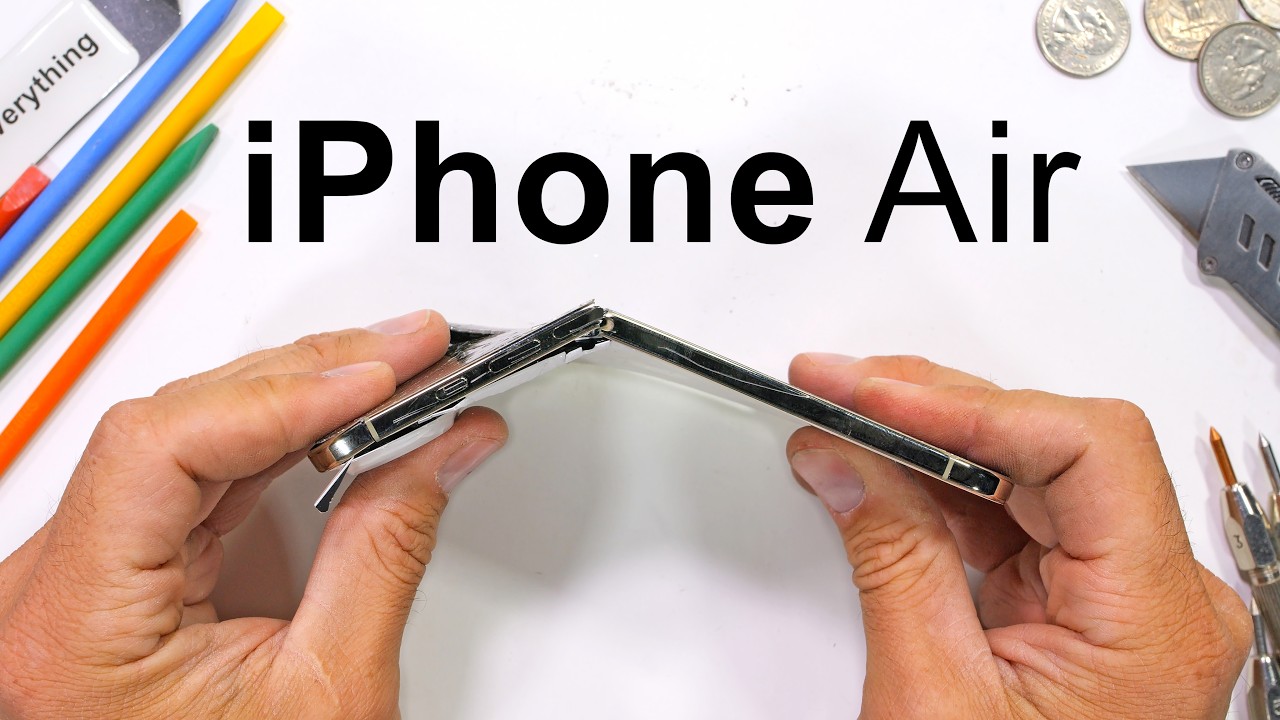
Thin phones often create an immediate durability concern: less material appears to leave less room for structural strength. JerryRigEverything's English-language test subjects the iPhone Air to scratch, heat, and bending stress to examine whether Apple's ultra-thin design can survive more than careful everyday handling.
A laboratory-style destruction video is intentionally more severe than normal use. It is useful for revealing material choices and structural weak points, but it does not predict every accidental drop. Real-world damage still depends on impact angle, surface, height, and whether the phone is protected by a case.
The most important observation is that thinness does not automatically mean fragility. Frame geometry, internal reinforcement, glass design, and how components are distributed can keep a slim device surprisingly rigid. Cosmetic scratches remain a separate issue, especially on exposed edges and camera surfaces.
Owners who value the iPhone Air's low weight can protect that advantage with a slim case and a quality screen protector rather than a bulky enclosure. AppleCare or suitable insurance may also be worth considering. The durability test inspires confidence, but sensible protection is still cheaper than repairing a premium phone.
Source: www.youtube.com
Conversation
0 commentsNo comments yet. Start a useful conversation.